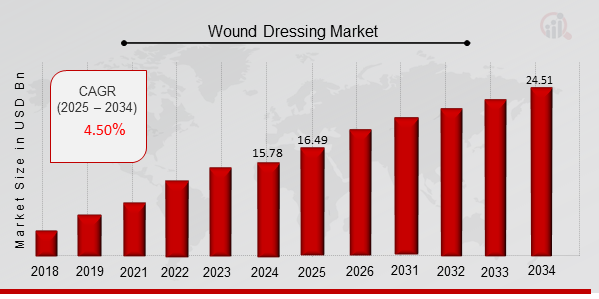
Wound dressings are medical materials applied to protect, clean, and promote healing of acute and chronic wounds. They range from traditional gauze to advanced hydrocolloid, alginate, foam, film, and hydrogel dressings that actively manage moisture, deliver antimicrobial agents, or support tissue regeneration. The wound dressing market is expanding rapidly as the prevalence of diabetes, obesity, and an aging population drives demand for effective management of surgical, traumatic, and diabetic foot ulcers.
Key Market Drivers-
Rising Chronic Wound Incidence: Conditions like diabetic foot ulcers, venous leg ulcers, and pressure injuries are becoming more prevalent, increasing the need for advanced wound care solutions.
-
Aging Population: Elderly patients often have slower healing and higher risk of pressure ulcers, boosting demand for specialized dressings.
-
Technological Advancements: Development of bioactive dressings—incorporating silver, honey, growth factors, or collagen—enhances antimicrobial protection and tissue repair.
-
Growing Home Healthcare Trend: More wound care is shifting from hospitals to home settings, driving demand for easy-to-use, long‑wear dressings.
-
Healthcare Cost Pressures: Advanced dressings that accelerate healing and reduce infection rates help lower overall treatment costs and hospital stays.
-
High Cost of Advanced Dressings: Premium dressings with bioactive components can be expensive, limiting use in resource‑constrained settings.
-
Reimbursement Variability: Coverage for innovative wound care products varies widely by region and insurer.
-
Clinical Evidence Requirements: Adoption of new dressing technologies often depends on robust clinical data demonstrating superior outcomes.
-
Patient Compliance: Frequent dressing changes and complex application protocols can affect adherence, especially in home care.
-
Traditional Dressings: Gauze, bandages, and cotton-based materials primarily for simple wound coverage.
-
Advanced Dressings:
-
Hydrocolloid Dressings (moisture-retentive, self‑adhesive)
-
Alginate Dressings (highly absorbent for exudative wounds)
-
Foam Dressings (cushioning, moderate absorption)
-
Hydrogel Dressings (moisturizing, debridement support)
-
Film Dressings (transparent, barrier protection)
-
Antimicrobial/Bioactive Dressings (silver‑impregnated, honey, collagen)
-
-
Acute Wounds: Surgical incisions, traumatic lacerations, burns.
-
Chronic Wounds: Diabetic foot ulcers, venous leg ulcers, pressure injuries.
-
Specialty Care: Burn units, oncology (radiation‑induced skin injuries), and pediatric wound care.
-
North America: Leading market with high adoption of advanced dressings, strong home healthcare infrastructure, and favorable reimbursement.
-
Europe: Significant growth driven by aging populations and established wound care protocols in hospitals and community settings.
-
Asia‑Pacific: Fastest-growing region, fueled by rising diabetes rates, expanding healthcare access, and increasing awareness of advanced wound therapies.
-
Smart Dressings: Incorporating sensors or color‑changing indicators to signal infection or moisture levels.
-
3D‑Printed and Custom Fit Dressings: Tailored to wound geometry for optimal coverage and patient comfort.
-
Combination Dressings: Delivering multiple functionalities—e.g., antimicrobial plus growth factor release.
-
Sustainable Materials: Development of biodegradable and eco-friendly dressing substrates.
The wound dressing market is poised for continued expansion as technological innovations deliver faster healing, better infection control, and improved patient experiences both in hospitals and home care. Manufacturers that invest in clinically validated, cost‑effective advanced dressings and navigate reimbursement pathways will capture significant opportunities in this dynamic, high‑impact healthcare segment.
